
Why AI isn’t a “junior engineer”
10 minute read
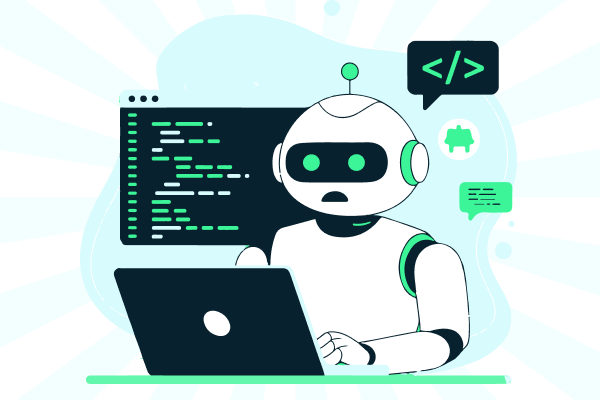
The rise of AI tools in software engineering has sparked endless discussions of how to treat machine-generated code. Some have even gone as far as to say it can act like a junior engineer for your team! While it’s tempting to imagine AI as a new employee: Quick, eager, and successful with some hand-holding, framing the tool this way is not ideal.
While I understand the need to better define how individuals and teams work with AI systems, here’s why AI is not a junior engineer.
1. AI doesn’t own outcomes
Junior engineers are accountable. When they write code, test features, or debug systems, they take responsibility for the results. AI, on the other hand, produces output without ownership, and the individual using the tool is the one responsible. If a bug slips into production from an AI-generated snippet, the system won’t learn or make better decisions next time without constantly feeding that context back in.
AI is not a teammate. It’s a tool to be used by a team member
2. AI can amplify mistakes at scale
Junior engineers make mistakes, but those mistakes tend to be isolated and fixable. A misplaced semicolon, a misnamed variable, an off-by-one error. Mentorship and code review catch these issues before they become a pattern.
AI’s mistakes are different. A flawed prompt or misunderstanding can generate hundreds of lines of insecure or inefficient code in seconds. Left unchecked, those errors spread like wildfire through a codebase, introducing risks on a scale that no human engineer could match.
This is why human oversight isn’t optional — it’s mandatory. How we confidently place these tools in the hands of junior engineers is still an open question.
3. Calling AI a “junior engineer” is dismissive
There’s another problem with the analogy: it undermines the value of real junior engineers.
Human juniors bring curiosity, potential, and a capacity to grow. They learn from feedback and contribute fresh perspectives to teams. Labeling AI as a “junior engineer” implies that their role is reducible to grunt work, pattern matching, and mixed outcomes, which is unfair and untrue.
A junior engineer is not just a coder; they’re a developing professional, an apprentice learning the craft, and an investment in the future of a team. AI, by contrast, has no growth trajectory and no stake in the long-term success of a project.
Equating the two risks minimizes the human side of engineering at the very moment when we should be doubling down on mentorship and talent development for employees of all skill levels, including juniors.
Final thoughts
AI is powerful, but it’s not a junior engineer. It doesn’t own outcomes, it can increase mistakes drastically, and it can’t be mentored. Most importantly, labeling it a “junior engineer” is unfair to the individuals who actually fill that role and bring value far beyond the code they write.
Still, there are many outstanding questions about how to train and onboard junior engineers with these powerful tools properly. If AI handles many of the rote coding tasks, how will junior engineers gain the fundamental experience of "doing things themselves" that is crucial for their development? We need to explore new approaches that integrate AI as a learning aid without hindering the hands-on practice essential for skill acquisition.
AI is a tool — an assistant that makes skilled engineers more productive. The future of engineering depends not on replacing juniors with AI, but on fostering collaboration between humans and AI-based tools.