


Why you need to reexamine your marketing audiences
10 minute read

Perhaps it's that I'm getting older, but lately I've found myself thinking deeply about the various experiences and circumstances that shape human behavior. In my personal life, that looks like this...
Once upon a time, when a friend would fade from my life or my messages would go unanswered, I would get frustrated. I didn't understand why they couldn't make the time to reply to something that, to me, mattered.
Somehow, I disregarded that they might be dealing with something that mattered deeply to them, and it might be personal. They may have started using another messaging platform. Or it might be just... different. These days, I find myself believing that no one really means to do harm to or ignore others. Life is busier and more complicated than ever for so many. It can change habits and rituals. People shift.
In the working world, it can be even more complex. Professionals of all ages (who are also dealing with their personal lives, too...) are having to swim through a tidal wave of technological advancements, for which there's no definitive right or wrong way to use. They're still developing, so everyone is constantly reeling. Drowning even. And by the time we come up, gasping for air, something new has emerged.
We are tired. Some of us haven't even noticed that these kinds of things have fundamentally augmented aspects of how we accomplish work or make decisions. We are too overwrought to see clearly. And there are at least two major reasons why.
Social media & messaging platforms
Consider this: The average person over the age of 16 uses between 6 and 7 social media apps, and on those apps, they spend around 19 hours per week (younger audiences tend to be more social online, with those in the 65+ age range reducing their use). Regardless of usage, many of these apps offer messaging capabilities or communities where users can chat. Further complicating this wide range of messaging options is that people generally prefer not to be messaged uniformly across the board. Instead, they prefer close contacts to use specific methods and businesses to use others. Here's some interesting data from Twilio to back that up.
- For friends and family, the preferences are as follows: 34% prefer native SMS, 31% prefer WhatsApp, 20% prefer Facebook Messenger, 5% prefer LINE, 3% prefer Snapchat, and 7% prefer another messaging app.
- For branded communication, though: 47% prefer native SMS, 21% prefer Facebook Messenger, 18% prefer WhatsApp, 6% prefer LINE, 2% prefer Snapchat, and 6% prefer another messaging app.
Fears about privacy
Though we are all chronically online, there are many concerns about being so digitally available. Malwarebytes ran a privacy concerns survey and found that "89% of respondents are concerned about their personal data being used inappropriately by corporations" and "77% of people feel that many online transactions are designed to collect their personal data." And let's be honest, they should be worried, and yes, they are being placed in sales funnels... It's how today's world works. That being said, those concerns can prompt people to change the way they've done things in the past.
Which brings me, at long last, in the most clumsily human way, to today's point: We all need to take a fresh look at our marketing audiences.
Circumstances and situations change rapidly on personal and professional levels. Your marketing audiences are likely not the same as they were even a year ago. Now that AI and a wide swath of other wild tech wonders have been unleashed, people are behaving differently. You can start this analysis by asking some essential questions to become more effective.
Where are my marketing audiences active?
Your people won't "hang out" in the same places forever. Just as many of my aging friends now frequent quiet book nooks and low-key restaurants over crowded bars with blasting music, your marketing audiences migrate to what suits their current needs. This is due to several factors. Some have jumped from one social network to another with a different algorithm, fewer ads, or a different agenda. Some are just going dark. Others are choosing to engage elsewhere in ways that didn't previously exist.
You can find this out in a few ways, but the most effective method is to ask them directly. Your customers. Survey them. If that isn't effective, though, you can always read industry reports focused on behavior and stay up-to-date with newly launched online and in-person communities.
Where are your marketing audiences having conversations?
Marketers have circulated numerous graphics based on Statista data, showing that Reddit is the number one cited source for LLMs. We now know that AEO strategies must include forums. Why? Because people are talking to each other there, and brands are not being excluded from those chats.
Your marketing audiences may not be on Reddit, but it's worth checking out to see if they are. You must be a part of the conversation so that you can provide the information they need to make educated decisions.
Where else are conversations happening? In the comments on social media apps, at in-person events, and in webinars! In short, in many places.
Do you have the correct information to understand what the marketing audience cares about?
Gathering the kind of information that drives results is not easy or quick. Here's how you do it.
1. Study your customers
You need to look for commonalities in your customers and ask them what helped them choose you.
2. Consider those you lost out on
You also need to consider people who didn't become your customers who could've. Why aren't people choosing you over your competitors? What aren't you giving them? Find out.
3. Learn what's missing
Ask people what kind of content or tools would help them in decision-making. Learn what's missing or what could be bolstered. Fill your gaps.
4. Dive into what matters
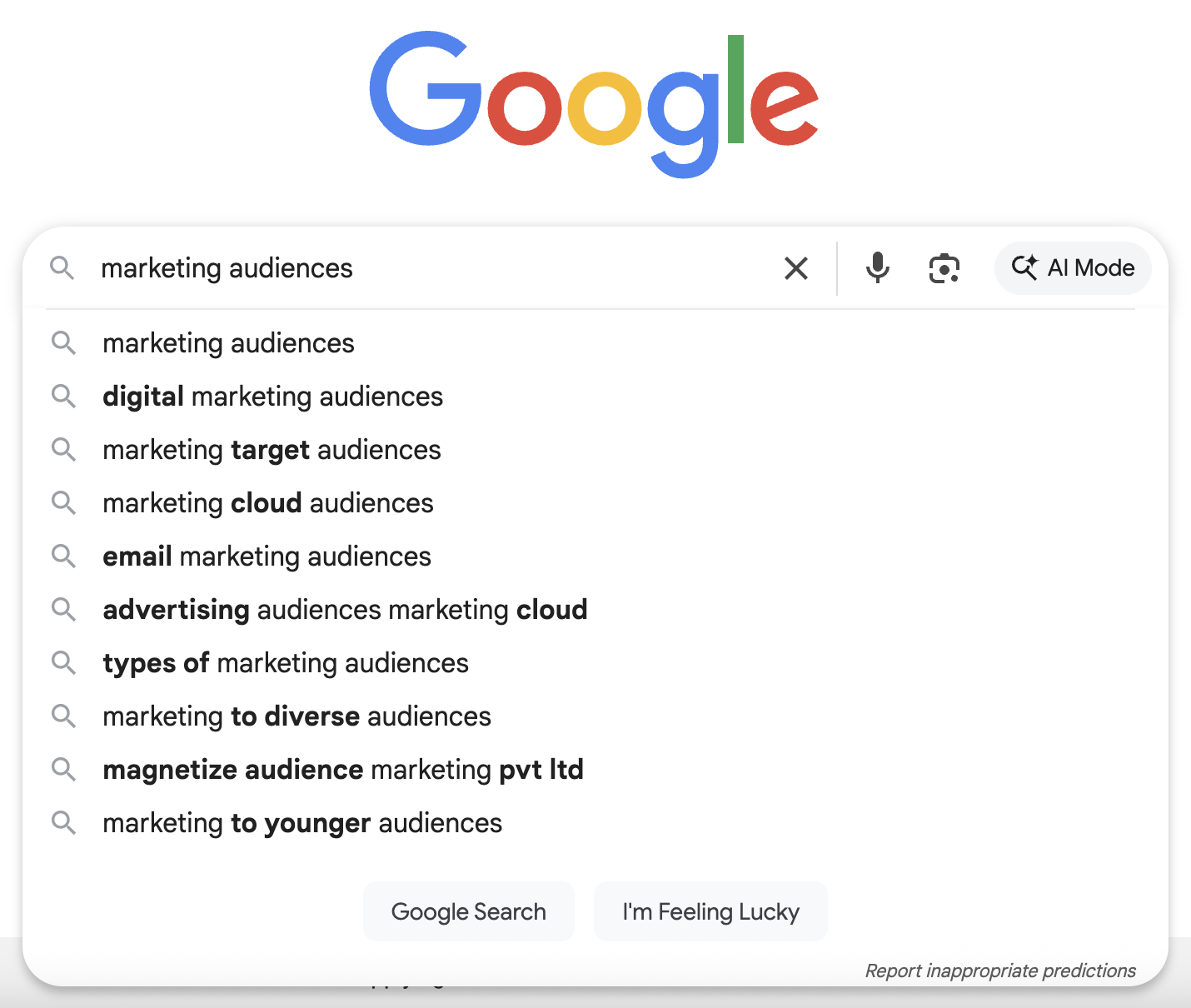
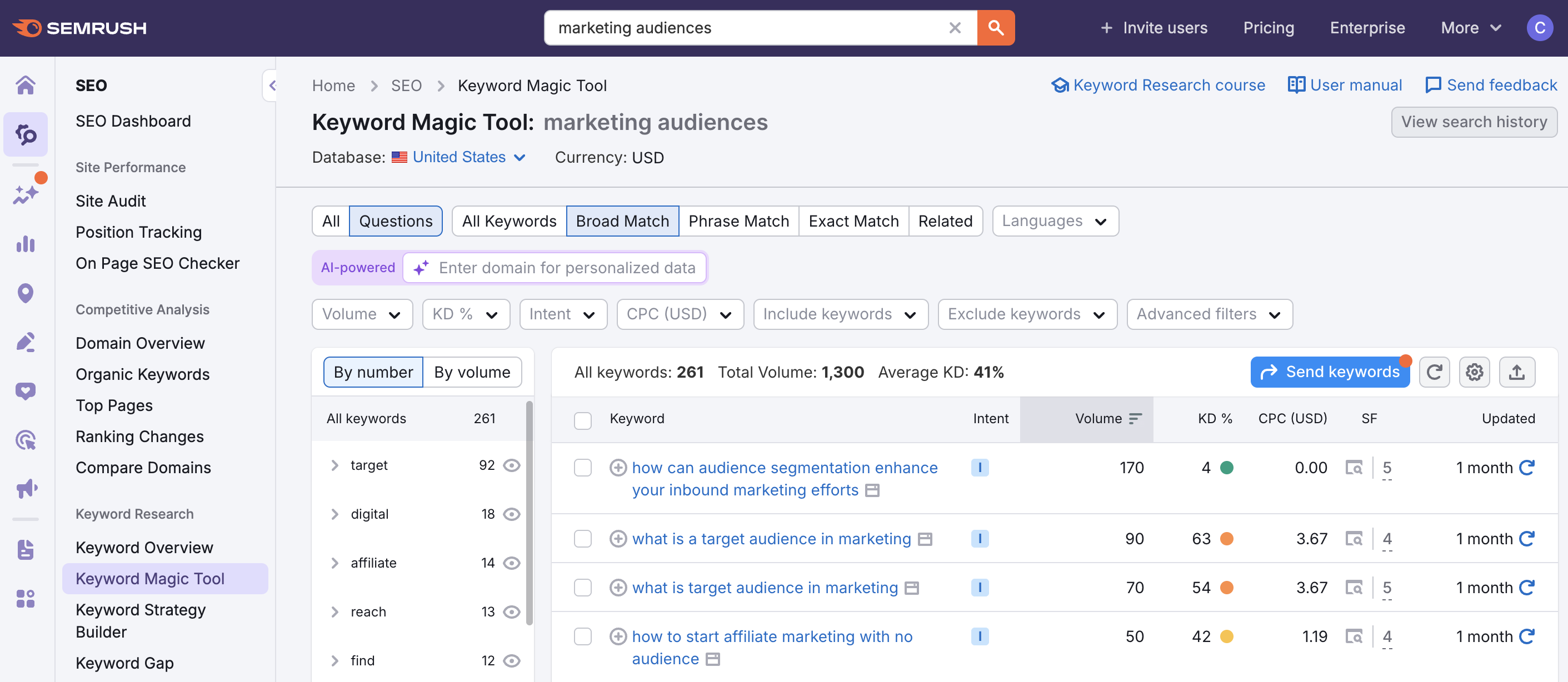
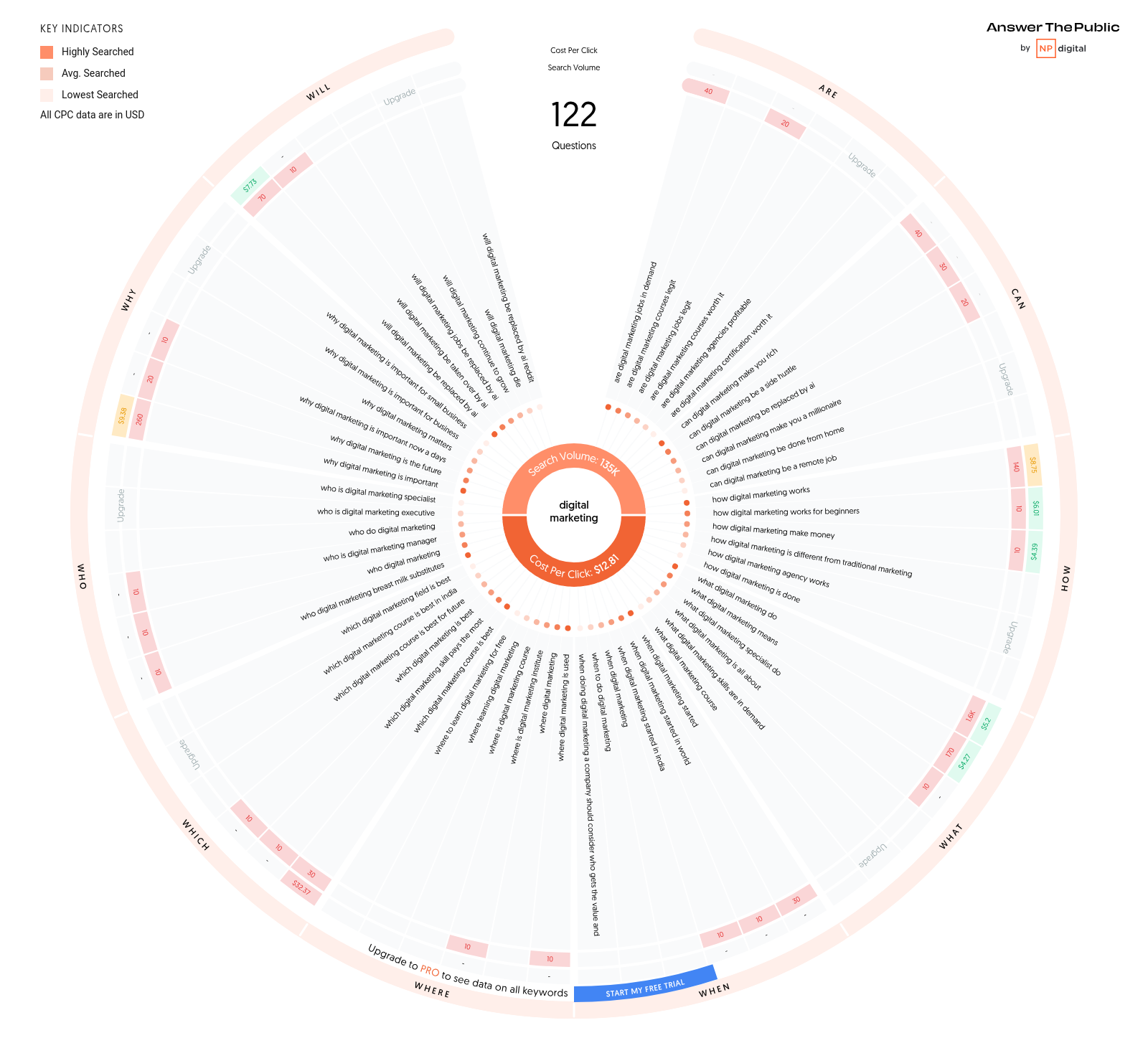
Even without speaking to customers or lost leads, you can get an idea of what they care about using tools such as the tried-and-true Google search box (the predictive text is quite revealing), Semrush, and AnswerThePublic. You can see what questions they're asking, which will allow your business to become the right answer for that right customer.
Marketing advice: Don't try to be the "right" answer if you're the wrong answer. Find questions that you can answer honestly and fully before engaging. People are smart and don't enjoy being pandered to. Marketing audiences are made up of real people with real concerns. Be worthy of their attention to earn their trust.
Are our personas worth anything?
Yes, personas are worth something, but they aren't meant to be the end-all, be-all, and they should continue to evolve.
Ask yourself...
- How were your personas built?
- When were they created?
- Do you have enough personas?
- Do your personas work together?
- Are your personas just decision-makers?
- Are your personas inaccurate shells or authentic?
People don't make decisions by themselves, especially in the B2B sector. There's a whole group you need to market to. Collectively, we need to start using a strategy that groups personas (that are realistic and organic) instead of siloing them. We need to consider that all levels can bring information to the attention of the final decision-maker. Marketing to a group of personas strategically is how you will earn a consensus vote on your business.
Do you want evidence of group interest? Use a tool like 6Sense or ZoomInfo to analyze intent. That's the only real way you can gauge how invested they are in learning more about your company specifically.
–
While we can never have 100% visibility into how our marketing audiences make decisions and what motivates them to act, it's our responsibility to continually strive to understand them and recognize that people's motivations can change over time. What strategies do you use to research your marketing audiences? I would love to chat strategy. Say hello.